Context
The Catalog
Insights
A Multi-Dimensional Lens
The 20 Protagonists
(Full report on-demand)
Patterns of
Behavior
The 'Nomad' Conflict
Acoustic Shielding
Lighting & Circadian Rhythm
Our research combined passive observation with quantitative analysis, focusing on four key pillars of the café experience.
Greeting, waiting time, and hospitality gestures.
From heritage-inspired houses to brutalist rooftops, we analyzed the most influential spots on Iranshahr Street.
Our observation revealed that the most successful cafés are those that effectively manage environmental 'friction'—the subtle discomforts that drive customers away.
We found a significant tension between remote workers and social groups. Cafés that implemented dedicated 'laptop zones' saw a 22% increase in social satisfaction.
Soft materials and partitioned zones were rated higher than open hall designs. Intimacy is the primary currency of Iranshahr street café culture.
Warm (2700K) lighting significantly drives the 'evening ritual'—a period where Iranshahr street sees its highest intellectual and social engagement.
Table Hogging vs. High Turnover
Conversational Privacy
Evening Experience Rating
Service UX
Eco-Acoustic
Spatial Design
Social Vibe
Music choice, volume, and conversational privacy.
Comfort, lighting, and material honesty.
Community feel and demographic presence.
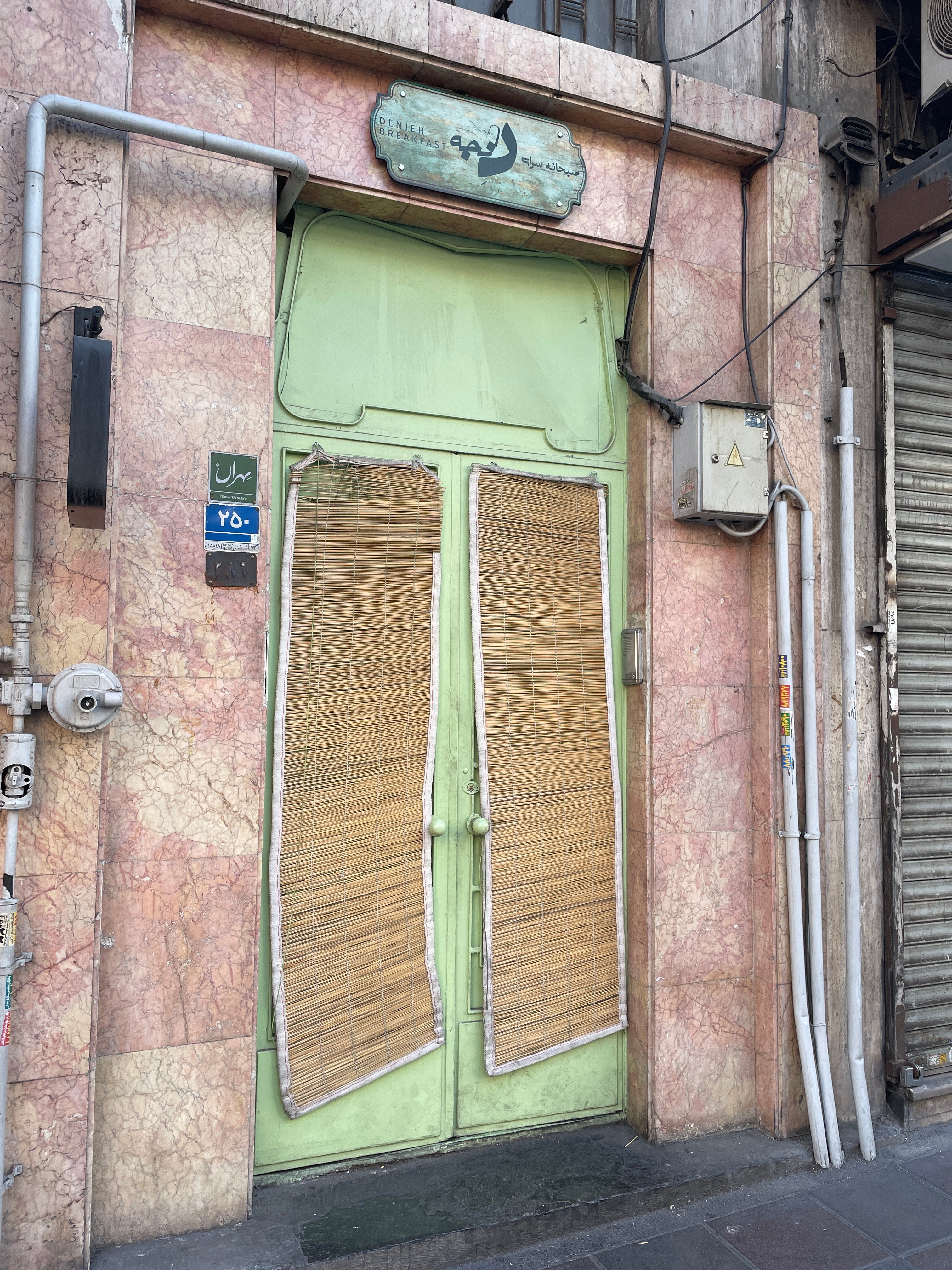
Denjeh Teahouse
Customer experience: Relaxed, traditional
Quality: Strong in tea, weak in modern menu
Space/design: Traditional Persian aesthetic
Social role: Older demographic, cultural gatherings
Urban role: Heritage continuity
7.5/10


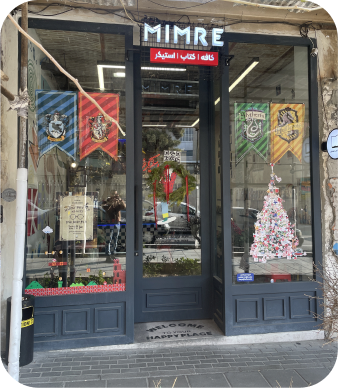
Mimre CAfe
Customer experience: Likely calm, quiet, low-interaction
Quality: Moderate (coffee not main focus)
Space/design: Bookstore-style, intellectual atmosphere
Social role: Students, readers
Urban role: “Third place” for reflection
7.0/10

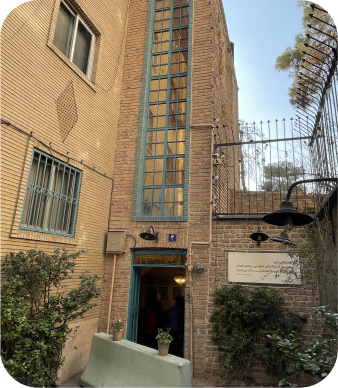
Niko CAfe
Customer experience: calm, quiet, mild-interaction
Quality: Moderate
Space/design: Heritage-style, intellectual atmosphere
Social role: casual visitors, experience seekers
Urban role: City History teller
7.2/10

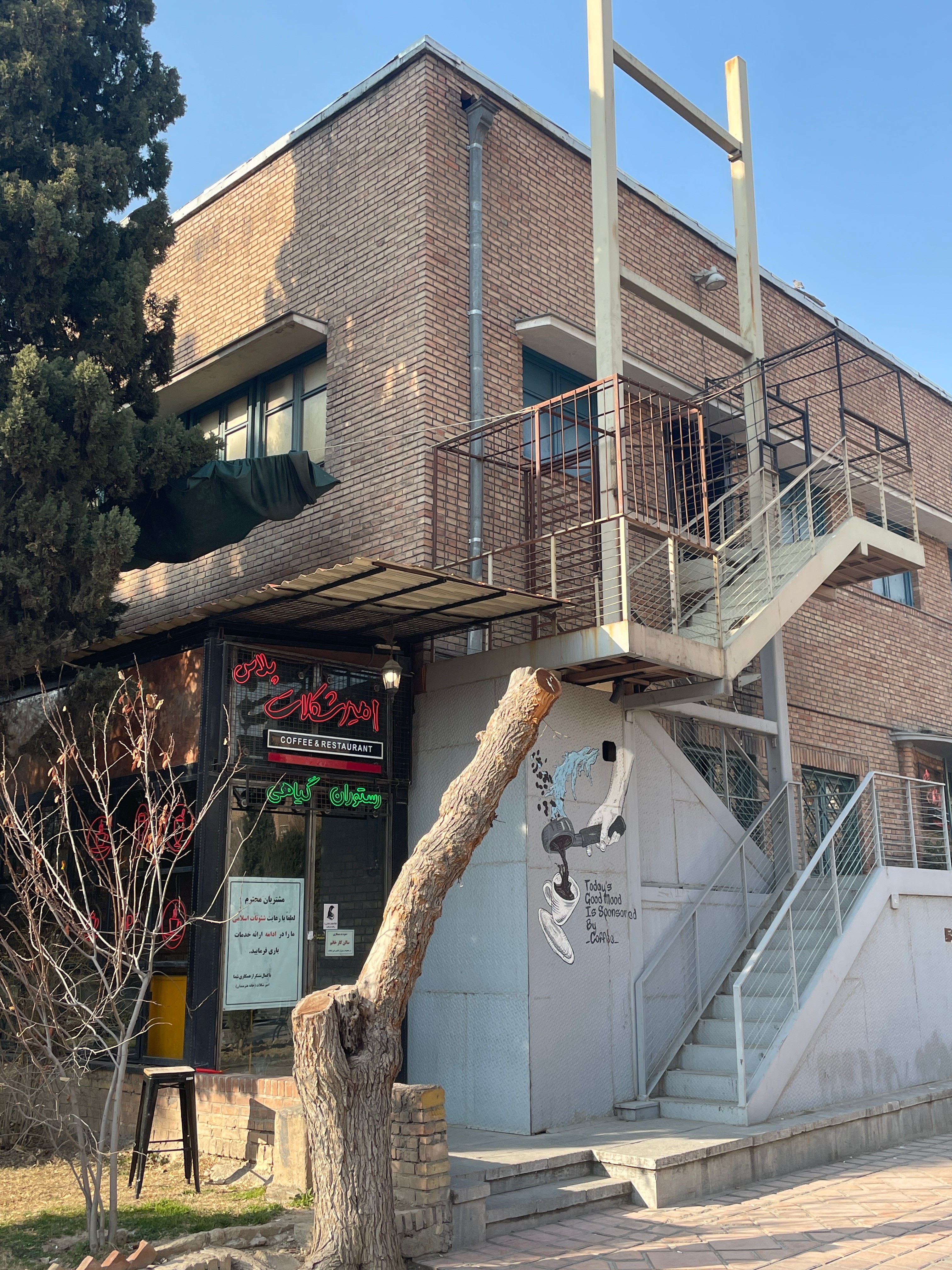
Amir Chocolate
Experience: Mixed
Quality: Good desserts
Space: Standardized
Social role: Casual visitors
Urban role: commercial chain
6.0/10

65%
82%
4.8/5


DATA POINTS
OBSERVED ENCOUNTERS
RESEARCH SPAN
FIELD OBSERVATION
ANALYSRD HUBS
ACTIVE CAFES
METRICS
EXPERIENCE CRITERIA
+300
8 WEEKS
20
12

While the number of cafés is exploding, the quality of "experience design" remains inconsistent. Many spaces prioritize visual aesthetics over social functionality, leading to beautiful but sterile environments that fail to foster genuine community.
Context
Tehran’s café culture—particularly along Iranshahr Street—has rapidly emerged as one of the city’s most vibrant and influential urban phenomena. These cafés extend far beyond their traditional function; they operate as dynamic social environments, creative hubs, and integral components of contemporary urban life.
Despite this growth, there remains a notable absence of structured, experience-driven insight into what truly defines a successful café within this context.
Many cafés rely on instinct rather than informed evaluation. While certain spaces cultivate strong identities and loyal communities, others struggle to distinguish themselves—even when offering comparable products and services. This inconsistency highlights a deeper issue: the lack of a coherent framework for understanding and measuring café experiences.
While the number of cafés is exploding, the quality of "experience design" remains inconsistent. Many spaces prioritize visual aesthetics over social functionality, leading to beautiful but sterile environments that fail to foster genuine community.


Experience & service quality analysis
Inconsistent service standards across peak hours
Underutilization of Cafés as Social & Cultural Spaces
Lack of Comparative Market Insight
Missing Link Between Space, Behavior, and Experience
Social behavior & customer segmentation
Cultural role in urban lifestyle
comparative ranking system
Beyond the Surface
OBJECTIVES
The Research Goal


"The duration of stay is inversely proportional to music volume and seating variety."


Ranking Matrix
The Researcher
Recommendations
Future Outlooks
Competetive benchmark
Curating Urban Narratives
Design
Cafe Nikou
Total: 91%
Total: 86%
Total: 84%
Total: 79%
Apartment Cafe
Prague Bakery Cafe
Arsa Book House
Service
Culture








Full comparative report available on request.
Implement hybrid searting(Bar vs. lounge)
Tehran’s Cafe culture is moving toward “specialization”. The era of the generic cafe is over; users now seek spaces with clear functional identities.
Iranshar Street acts as the testing ground for these urban experiments.
This project was completed as part of a Cultural Ethnography study. Interested in urban strategy, UX research, or cultural analysis? Let's connect.
Decentralize service point
Curate atmospheric identities
Integrate local artisanal elements



Request Full Study Booklet


THE PROBLEM
Methodology